If your recovery, readiness, or HRV seems unpredictable, hormones may be part of the explanation. Learn how estrogen and progesterone influence recovery and what wearables can't measure directly.
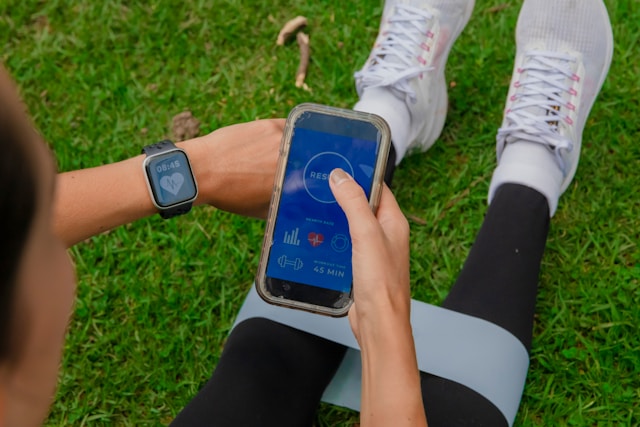
If your recovery, readiness, or HRV seems unpredictable, hormones may be part of the explanation. Learn how estrogen and progesterone influence recovery and what wearables can't measure directly.
Last week your workouts felt easy.
This week everything feels harder. You're sleeping the same amount. Eating the same way. Training the same way. Yet you're waking up exhausted and your recovery scores are tanking.
If this happens every month, if certain weeks are reliably harder to get through, harder to recover from, harder to feel good in, your hormones may be driving far more of your recovery than you realize.
Recovery isn't just about what you did yesterday. It's about the physiological environment your body is recovering in. And that environment changes with your hormones.
Recovery problems aren't always recovery problems
This is the insight that changes how most women interpret their data.
When recovery is poor, the instinct is to look at what went wrong behaviorally. Did you sleep enough? Were you dehydrated? Did you overtrain? Is stress elevated?
These are all valid questions. But if you've checked all of them and the answer is "nothing changed", if the only thing that changed was which week of your cycle it is, then the explanation may not be behavioral at all.
Some of the most common "recovery problems" women describe are actually hormone patterns:
Low progesterone or an anovulatory cycle. When ovulation doesn't produce a robust corpus luteum, progesterone is minimal. Without progesterone's GABAergic calming effect on the nervous system, sleep becomes lighter, HRV drops, and recovery is genuinely impaired, not because of training load, but because the hormonal support for recovery isn't there.
Estrogen volatility. Estrogen that swings sharply, high one week, low the next, affects everything from sleep architecture to muscle repair to HRV. Women with volatile estrogen patterns often describe feeling like a different person from week to week. Their recovery data reflects exactly that.
Late luteal hormone withdrawal. In the week before a period, both estrogen and progesterone are declining. Recovery scores drop. HRV falls. Resting heart rate rises. This is a predictable hormonal pattern, not a sign that fitness has declined or that something went wrong.
Perimenopause-related changes. As ovulation becomes less consistent and progesterone production more variable, recovery patterns often become less predictable over months. Women in perimenopause frequently notice their recovery has been declining in ways that don't track with anything they're doing differently.
This is especially common in women in their late 30s and 40s, when hormone patterns begin changing long before periods become irregular or other symptoms appear. Recovery that suddenly stops responding to the same inputs, sleep, nutrition, rest, is often the first place those changes show up. For more on what that transition looks like and when it begins, see Am I in Perimenopause? Why Your Reproductive Stage Matters More Than You Think.
In all of these cases, the wearable is accurate. It's measuring a real physiological state. What it can't tell you is why that state exists, whether it's a training recovery problem or a hormone problem. Those are two different things with two different solutions.
How estrogen and progesterone affect recovery
Understanding the specific mechanisms helps explain why the pattern looks the way it does.
Estrogen supports recovery in several direct ways. It promotes muscle repair after exercise by supporting satellite cell activity. It supports the deeper sleep stages, slow-wave and REM, that are most restorative. It maintains parasympathetic nervous system tone, which is reflected in higher HRV. When estrogen is rising, in the follicular phase, most women notice their best recovery numbers and their most resilient feeling in training.¹
Progesterone has a more complex relationship with recovery. At its mid-luteal peak, progesterone has a genuinely sedating effect through the GABA system, and some women sleep better in the early luteal phase for this reason. But progesterone also raises core body temperature, which wearables pick up as a temperature signal and may interpret as physiological stress. And as progesterone falls in the late luteal phase, its calming effect on the nervous system disappears. Sympathetic tone rises. HRV drops. Sleep fragments. The wearable correctly detects a less-recovered state, but the driver is hormone withdrawal, not inadequate rest.²
The practical pattern this creates:
The follicular phase, when estrogen is rising, tends to be when recovery is strongest, training feels easiest, and scores are highest.
The early luteal phase, when progesterone peaks, may maintain good recovery, though temperature elevation can make some scores appear lower than felt.
The late luteal phase, when both hormones fall, tends to produce the lowest recovery scores, the hardest-feeling workouts, and the most disrupted sleep, regardless of behavioral inputs.
Menstruation, when hormones are at their lowest but the inflammatory signal preceding the period begins to resolve, often brings a recovery rebound mid-cycle, sometimes before hormones have meaningfully risen.
Why the same workout feels harder before your period
This is one of the most reliably reported experiences women describe, and one of the least explained.
It's not that you're less fit. It's that the hormonal environment supporting performance has changed. Several mechanisms converge in the late luteal phase:
Progesterone is a mild respiratory stimulant. It increases ventilation rate, which means you're breathing harder at the same effort level. That alone makes training feel more demanding.
Core body temperature is elevated due to progesterone. You reach heat-stress thresholds sooner. Your body has to work harder to dissipate heat at the same intensity.
Glycogen metabolism shifts in the luteal phase. High-intensity exercise that relies primarily on carbohydrate oxidation may feel harder because the hormonal environment favors fat oxidation instead.³
Muscle activation efficiency may decrease when estrogen is lower. Some women describe a quality of heaviness or reduced power output that isn't explained by fatigue.
None of this means training is less valuable in the luteal phase. It means the experience is different and recovery requires more time. Adjusting expectations, rather than pushing through the same intensity and wondering why it's harder, is working with the physiology, not against it.
Why your HRV is so variable some weeks
HRV variability that doesn't track with behavioral inputs is one of the clearest signals of a hormonal driver.
Estrogen promotes parasympathetic tone, which raises HRV. The late follicular phase and ovulation tend to produce the highest HRV readings of the cycle for this reason.
Progesterone withdrawal produces sympathetic activation, which lowers HRV. The late luteal phase HRV drop is well-documented and hormonally driven, not stress-driven.
Overnight cortisol becomes more variable in the late luteal phase. When progesterone's inhibitory effect diminishes, cortisol regulation is less precise overnight. Blood sugar dips may trigger more pronounced cortisol responses. That cortisol activity suppresses HRV in ways that show up in wearable data, and may be part of why women wake in the early morning hours in the days before their period. For more on the overnight cortisol and sleep connection, see Perimenopause Insomnia: Why You Can't Sleep (And How to Fix It).
Inflammation before menstruation adds load. The prostaglandin activity that precedes menstruation creates a mild systemic inflammatory signal. The autonomic nervous system responds to it. HRV drops. The wearable is accurately reflecting real physiological load, it just can't tell you where that load is coming from.
If your HRV varies significantly week to week despite consistent behavior, tracking where that variability falls in your cycle will almost always reveal a pattern. It's not random. It's hormonal.
What your wearable can't tell you
This is the most important section, and the one that reframes how to use both wearable data and hormone data together.
Your wearable measures physiological outputs. It detects that your HRV dropped, your temperature rose, your resting heart rate increased, your sleep fragmented. It correctly reports what happened. What it can't tell you is why.
A low late-luteal HRV in a woman with healthy progesterone production looks identical on a wearable to a low late-luteal HRV in a woman with suboptimal progesterone. The number is the same. The hormonal story behind it is completely different, and the appropriate response is completely different.
The same applies to recovery scores that are declining over months. A wearable can't distinguish between:
A recovery pattern that's declining because training load increased.
A recovery pattern that's declining because progesterone production is becoming more variable with age.
A recovery pattern that's declining because estrogen volatility is increasing as perimenopause begins.
Standard lab testing doesn't necessarily help either, a single blood draw captures a snapshot, not a pattern. For more on why this matters, see What Your Doctor Orders vs. What You Actually Need: The Gap in Standard Hormone Testing.
The missing layer is longitudinal hormone data, how your hormones are actually moving across your cycle, not what they measured on one particular morning. Women who track both tend to find that the cycles with the lowest recovery scores are the same cycles with weaker progesterone peaks, more anovulatory patterns, or higher estrogen volatility. That correlation is the most actionable data available. And it only becomes visible when both layers are present.
Two cycles can produce the same recovery score for completely different hormonal reasons. That's why understanding how patterns change month to month is often more valuable than understanding a single score. The number is the same. The story behind it may be entirely different.
What this means if you're in perimenopause
For women in their late 30s and 40s, the recovery patterns described above can become more unpredictable, and the progression matters.
In perimenopause, ovulation becomes less consistent. When cycles are anovulatory, progesterone is minimal throughout, which removes both the mid-luteal sleep support and the late-luteal withdrawal pattern. Recovery may not follow a predictable cycle anymore. Instead it may feel more globally degraded, with fewer good weeks and less obvious periodicity.
Estrogen also becomes more volatile rather than simply declining. It can spike high and drop sharply within a single cycle. That volatility is harder on recovery than a gradual decline, it creates a less stable hormonal environment for sleep, HRV, and muscle repair.
Women who notice their recovery trending worse over months, not just in specific cycle phases, but more broadly, and who can't attribute it to training, sleep, or stress changes may be experiencing this shift. It often begins before cycles become irregular or obviously symptomatic. The recovery data may be one of the first places it shows up.
For more on how hormones affect sleep throughout the cycle and in perimenopause, and why symptoms often begin before standard labs flag anything, those articles cover the adjacent dimensions of this pattern.
Frequently Asked Questions
Can hormones affect recovery and HRV?
Yes. Estrogen supports parasympathetic tone, muscle repair, and deep sleep, all of which drive recovery scores higher. Progesterone withdrawal before the period reduces HRV, increases resting heart rate, and fragments sleep. Both hormones directly influence the physiological signals that wearables aggregate into recovery scores.
Why is my recovery score low even when I slept 8 hours?
Recovery scores aggregate multiple signals beyond sleep duration, including HRV, resting heart rate, and temperature. In the late luteal phase, all of these shift in ways that lower scores regardless of sleep behavior. If scores are consistently lower in specific weeks despite consistent sleep, that's a hormonal pattern worth identifying.
Why does my HRV drop before my period?
HRV typically drops in the late luteal phase as progesterone and estrogen both decline. Progesterone withdrawal reduces the nervous system's inhibitory buffer, sympathetic tone rises, and mild pre-menstrual inflammation adds physiological load. This is hormonally driven and consistent across cycles.
Why does the same workout feel harder before my period?
Progesterone raises core temperature and increases ventilation rate, making the same effort feel harder. Glycogen metabolism shifts toward fat oxidation in the luteal phase, affecting high-intensity performance. These are physiological changes, not fitness declines.
Is declining recovery a sign of perimenopause?
It can be, but it doesn't have to be. As ovulation becomes less consistent and progesterone production more variable in perimenopause, recovery patterns often become less predictable. A progressive decline in recovery that doesn't track with behavioral inputs, and that worsens over months, may reflect the early hormonal shifts of perimenopause even before cycles become visibly irregular.
What can hormone tracking add to wearable data?
Wearable data shows physiological outputs, HRV, temperature, heart rate, sleep stages. Hormone data shows what's driving those outputs. Combining both lets you distinguish between a recovery problem driven by training load and one driven by hormonal patterns, which have different causes and different solutions.
About the author
Sources
- Hansen M, Kjaer M. "Influence of sex and estrogen on musculotendinous protein turnover at rest and after exercise." Exercise and Sport Sciences Reviews. 2014;42(4):183–192.
- Backstrom T, et al. "Allopregnanolone and mood disorders." Progress in Neurobiology. 2014;113:88–94.
- Devries MC, et al. "Menstrual cycle phase and sex influence muscle glycogen utilization and glucose turnover during moderate-intensity endurance exercise." American Journal of Physiology. 2006;291(4):R1120–R1128.
About the Oova Blog:
Our content is developed with a commitment to high editorial standards and reliability. We prioritize referencing reputable sources and sharing where our insights come from. The Oova Blog is intended for informational purposes only and is never a substitute for professional medical advice. Always consult a healthcare provider before making any health decisions.