Many women in perimenopause experience insomnia, early waking, anxiety, and disrupted sleep. Learn what hormonal changes may be contributing and why it often starts before periods become irregular.

Many women in perimenopause experience insomnia, early waking, anxiety, and disrupted sleep. Learn what hormonal changes may be contributing and why it often starts before periods become irregular.
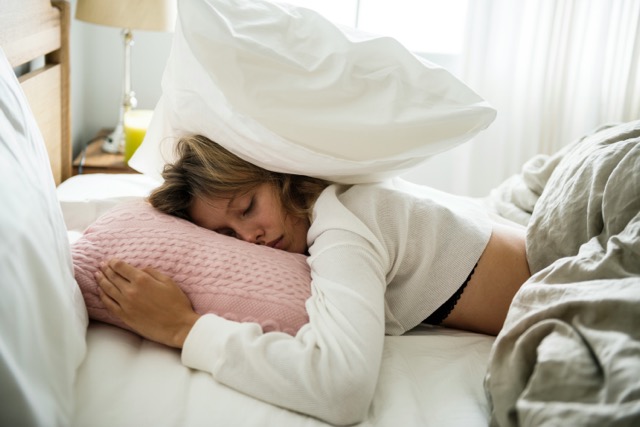
You fall asleep without much trouble. And then, somewhere around 2 or 3 in the morning, you're awake.
Not groggy. Wide awake. Sometimes anxious. Sometimes sweating. Sometimes just lying there with a racing mind and no idea why your eyes opened at exactly the same time they did the night before.
You wait. Eventually you drift back. But the alarm comes too soon, and the day starts already depleted.
If this started in your 40s and happens several nights a week, it isn't random. Middle-of-the-night waking in perimenopause is one of the most reliably reported sleep symptoms women describe during the transition, and it has a specific hormonal explanation that most women are never given.
This article is about that explanation. Not just that hormones affect sleep, that's broadly true and not particularly useful, but specifically why the waking tends to happen at the same time, why it often comes with anxiety or a racing heart, and why it may be getting worse over time even when nothing obvious changed.
Why you're waking up at 3 AM during perimenopause, the short answer:
- Declining progesterone reduces the brain's sleep-stabilizing buffer
- Estrogen fluctuations disrupt overnight temperature regulation
- Cortisol rises earlier and more sharply than it should
- Overnight blood sugar drops trigger a stress hormone response
The result: waking up alert, anxious, hot, or unable to fall back asleep, often at the same time every night.
Is waking up at 3 AM really a perimenopause symptom?
Yes, and it's one of the most common ones.
Nearly half of women report significant sleep disruption during perimenopause, with early waking, waking in the second half of the night and being unable to return to sleep, being one of the most frequent patterns.¹ It often appears before periods become irregular, which means many women don't yet connect it to perimenopause at all.
Quick Answer: Waking up at 3 AM during perimenopause is often linked to declining progesterone, fluctuating estrogen, cortisol changes, and overnight blood sugar shifts. These hormonal changes can make women more likely to wake between 2 and 4 AM, often with anxiety, a racing heart, or difficulty falling back asleep.
The 3am window isn't arbitrary. It maps to a specific phase of the sleep cycle and a specific point in the body's overnight hormonal rhythm, both of which are directly affected by the hormonal changes of perimenopause.
Why does waking happen at 3 AM specifically?
Sleep is not uniform across the night. The first half is dominated by deep, slow-wave sleep. The second half shifts toward lighter REM sleep, with more frequent partial arousals. The body is closer to wakefulness naturally in the early morning hours, which is also when certain hormonal events tend to converge.
Three things are happening around 2 to 4 AM that may explain why that window is when waking occurs:
Cortisol begins its natural overnight rise. Cortisol follows a 24-hour rhythm, with levels lowest in the early evening and rising sharply in the hours before waking, typically beginning around 3 to 4 AM. This rise is part of what eventually gets you out of bed. But if cortisol regulation is disrupted, and it often is during perimenopause, that rise may be earlier, steeper, or more pronounced than it needs to be.²
Blood sugar dips during the overnight fast. The body has been fasting since dinner. Blood sugar is at its lowest. Under normal hormonal conditions, this is managed quietly. But when insulin sensitivity is impaired, as it frequently is during perimenopause, a steeper blood sugar dip may trigger a more pronounced cortisol response to compensate, pulling blood sugar back up. That cortisol spike is enough to cause waking.³
Estrogen and progesterone are at their lowest. The hours between 2 and 5 AM are when circulating hormone levels are typically lowest. For women in perimenopause, where estrogen and progesterone are already volatile and often lower overall, this natural trough may be steep enough to disrupt sleep architecture.
The combination, a cortisol spike meeting the body's natural light-sleep window, in a hormonal environment already depleted, is why so many women wake at the same time every night.
What does progesterone have to do with sleep?
Progesterone is probably the least discussed piece of the 3am picture, and possibly the most important.
Progesterone has a direct sedating effect on the nervous system. It converts in the body to a neurosteroid called allopregnanolone, which binds to GABA receptors in the brain, the same receptors targeted by benzodiazepines.⁴ In plain terms: progesterone helps keep the nervous system calm during sleep. It promotes sleep continuity, reduces the likelihood of mid-sleep arousal, and supports the deeper phases of sleep.
During perimenopause, progesterone often declines before estrogen does. It's the first hormone to become erratic and insufficient, particularly in cycles that don't produce a robust ovulation, or in anovulatory cycles where no progesterone is produced at all. The result is less of the neurological buffer that was previously keeping the 3am transition smooth.
Women often describe the waking as distinctly anxious, a sense of dread or unease rather than just alertness. That anxious quality is frequently a progesterone signature. The GABA system that progesterone supports is also the one that modulates anxiety. When progesterone is low, that system has less tonic inhibition, and arousal from sleep may come with a baseline anxiety spike.⁵
This is also why progesterone-containing HRT is often specifically helpful for sleep, not just because it addresses hormonal symptoms broadly, but because it directly supports the GABA system that sleep continuity depends on.
What does estrogen have to do with sleep?
Estrogen's role in sleep is different from progesterone's and operates through several pathways.
Estrogen supports serotonin availability, which influences mood and sleep quality. It influences thermoregulation, the body's ability to maintain a stable core temperature during sleep. And it appears to support REM sleep architecture in ways that aren't fully understood but are well-documented in the research.⁶
The hot flashes and night sweats that many women experience during perimenopause are directly caused by estrogen's role in thermoregulation. The hypothalamus, the brain's temperature regulator, becomes more sensitive to small temperature fluctuations as estrogen declines. Minor changes in core body temperature that previously would have been tolerated without a response now trigger a vasomotor event: blood vessels dilate, heat is released, sweating occurs.
That thermal event is often sufficient to cause waking even when it doesn't feel dramatic. Many women describe waking damp rather than soaked, a mild vasomotor response that was still enough to pull them out of sleep.
But estrogen's effect on sleep goes beyond hot flashes. Even women without classic night sweats report worse sleep quality as estrogen becomes more volatile during perimenopause. The erratic fluctuations, not just the decline, may be what most directly disrupt sleep architecture, because the brain's sleep systems are sensitive to the consistency of estrogen signaling, not just its level.⁷
Why does waking at 3 AM come with anxiety?
This is one of the most disorienting aspects of perimenopause-related sleep disruption, and one of the most underexplained.
Waking in the middle of the night with a sense of dread or anxiety, with no obvious cause, is not a psychological symptom. It's a physiological one.
When cortisol spikes in the early morning hours, earlier or more sharply than it should, it activates the sympathetic nervous system. Heart rate increases slightly. Alertness sharpens. The same system that evolved to prepare the body for threat is being activated by a hormonal shift. That activation registers in the conscious mind as anxiety or unease, even when there's nothing to be anxious about.
Compound this with low progesterone, and its reduced GABAergic buffering, and you have a nervous system that is simultaneously activated by cortisol and lacking the neurological cushion that would normally moderate that activation.⁸
Perimenopause anxiety during the day is driven by similar dynamics: the interaction between estrogen volatility, cortisol regulation, and the nervous system's reduced buffer when progesterone is low. But the nighttime version is often more intense because the brain has less conscious distraction available to modulate the experience.
Heart palpitations that accompany nighttime waking are part of the same picture, a mild sympathetic activation that registers as a racing or pounding sensation, particularly noticeable in the quiet of the middle of the night.
Why is it getting worse over time?
Many women notice a clear progression: occasional waking becomes frequent waking, which becomes nightly waking, which eventually starts affecting daytime function.
Part of this reflects the progressive nature of perimenopause itself, hormonal volatility tends to increase as the transition continues, and with it, the frequency and severity of sleep disruption.
But part of it is self-reinforcing. Poor sleep raises cortisol the following day. Elevated daytime cortisol makes it harder to fall asleep the next night and more likely to cause early waking. Disrupted sleep impairs insulin sensitivity, which makes overnight blood sugar management worse, which makes the cortisol spike that causes waking more pronounced.⁹ Each night of poor sleep sets up the conditions for the next one.
This is why women often describe the sleep problem as "getting worse on its own" even when nothing external changed. The hormonal cascade and its metabolic downstream effects compound over time. A single bad night matters less than a pattern of bad nights, because the pattern itself changes the physiological conditions the next night occurs in.
The variability matters too. Some nights are fine. Others aren't. And the pattern of which nights are worse, whether it tracks with the cycle, with stress, with alcohol, with how much was eaten before bed, often contains information about what's driving the disruption.
Why does it often start before periods become irregular?
This is one of the most important and least known aspects of perimenopausal sleep disruption: it frequently begins in the early stages of perimenopause, when cycles are still regular and most women don't yet think of themselves as perimenopausal.
The reason is that progesterone begins declining before estrogen does, and before cycle length or regularity changes. A woman can have normal-length, regular periods and still be in the early stages of the hormonal transition that defines perimenopause. If her cycles are producing less robust ovulations, and therefore less progesterone, her sleep may already be affected.¹⁰
This is the scenario that leaves many women confused and dismissed: they're told they're too young for perimenopause, their periods are regular, their labs are normal, and yet their sleep has meaningfully worsened. The worsening sleep may be the first signal that the hormonal transition has begun, appearing months or years before more obvious symptoms.
Understanding where you are in the perimenopause transition can provide context for why sleep symptoms may be appearing even when cycles look normal.
Why does alcohol make it worse?
Alcohol is sedating initially, it speeds the onset of sleep. But it disrupts sleep architecture in the second half of the night by suppressing REM sleep, increasing sleep fragmentation, and causing a rebound cortisol elevation as it's metabolized.¹¹
During perimenopause, that rebound is likely worse. Estrogen affects how the liver metabolizes alcohol. As estrogen declines and becomes more variable, alcohol's effects, including the second-half-of-the-night rebound, may become more pronounced. A glass of wine that once had no effect on sleep may now reliably cause 3am waking.
The same mechanism applies to late meals and high-sugar intake before bed: anything that causes a blood sugar spike followed by a drop sets up the conditions for an overnight cortisol surge and the waking that follows.
What patterns are worth paying attention to?
Not all middle-of-the-night waking is the same. But certain features tend to be informative:
Timing. Waking consistently between 2 and 4 AM, as opposed to early in the night or variable across the night, points toward a cortisol or blood sugar mechanism rather than sleep initiation problems. If you use a wearable such as Oura, pay attention to whether lower sleep scores, recovery scores, or HRV consistently coincide with the nights you wake in this window.
Quality of the waking. Anxious or alert waking, often with a racing heart, suggests sympathetic activation via cortisol. Hot or sweaty waking points toward a vasomotor event driven by estrogen fluctuation. Both can occur in the same night.
Cycle tracking. Waking that is notably worse in the week before a period, the late luteal phase, when progesterone is falling, or during cycles that felt different (anovulatory cycles produce little to no progesterone) is a strong progesterone signal.
Sleep tracking across time. The night-to-night variability, which nights were fine, which were disrupted, and whether there's a pattern, often tells more than any single night's experience. The goal isn't to focus on a single bad night. It's to identify whether sleep disruption follows a recurring hormonal pattern over time.
For a broader look at how perimenopause affects sleep beyond the 3am window, including strategies for improving sleep continuity, see Perimenopause Insomnia: Why You Can't Sleep & How to Fix It. For the blood sugar piece of the overnight picture specifically, Why Blood Sugar Feels Different During Perimenopause goes deeper on the cortisol-glucose-waking connection.
Why a single hormone test often misses this
Many women seek testing after sleep problems begin. They want to know if their hormones are the cause. And they're often told the results look normal.
The challenge is that sleep disruption during perimenopause is usually driven by hormone variability, how much estrogen and progesterone fluctuate day to day and across the cycle, rather than a single low value on a given morning.
A hormone level measured on one day may look normal while the pattern driving your sleep disruption remains invisible. This is one reason many women are told their hormone tests are "normal" even while symptoms continue.
A woman can have every individual hormone value fall within a reference range and still have a hormone pattern that's disrupting her sleep every night. The snapshot is clean. The pattern is not.
This is why tracking hormone behavior over time, across multiple nights, across the cycle, tends to be more informative than any single blood draw when sleep is the symptom being investigated.
Why your sleep score keeps dropping even when you're doing everything right
Many women are frustrated because they've done all the right things. Earlier bedtime. Less alcohol. No screens. Better sleep hygiene. And yet their sleep score keeps declining.
During perimenopause, this is common, and it's not a reflection of effort or discipline. Sleep disruption driven by hormonal changes responds differently than sleep disruption driven by habits. You can optimize the conditions for sleep perfectly and still wake at 3 AM if the hormonal environment that supports sleep continuity has shifted.
Wearables can surface this disconnect clearly: REM percentages dropping, recovery scores declining, HRV worsening, even on nights when every behavioral input was correct. What the wearable captures is the output. What drives the output is the hormone pattern underneath it.
Women who use continuous hormone monitoring alongside wearable sleep data often find that the nights with the worst scores track with specific hormonal windows, the late luteal phase, anovulatory cycles, or stretches of high estrogen volatility, rather than with anything they did differently that day. If you use wearables, you may notice these changes are most pronounced in the days before your period, when progesterone naturally declines. We'll explore that pattern in detail in Why Is My Oura Score Worse Right Before My Period?
What the 3 AM pattern is telling you
Waking at 3 AM repeatedly is your nervous system signaling that something in the hormonal environment that supports sleep continuity has changed.
It isn't insomnia in the conventional sense, you're not having trouble initiating sleep. It's early waking, driven by a convergence of cortisol timing, blood sugar regulation, and the declining hormonal support that previously kept the overnight transition smooth.
The timing is consistent because the underlying physiology is consistent. The cortisol rhythm peaks at the same time every night. The blood sugar trough arrives at the same point in the overnight fast. The progesterone floor is lowest at the same point in the sleep cycle.
What varies, and what's worth tracking, is when those systems are under more or less strain. Which nights are worse. Whether the pattern changes across the cycle. Whether it's progressively worsening or staying relatively stable. Whether other symptoms appear alongside it.
That pattern is information. And during perimenopause, the pattern is usually the most useful thing you have.
Ready to understand your hormone patterns?
Sleep changes during perimenopause are often driven by hormone patterns that a single blood test can't capture. Oova helps you track hormones over time so you can better understand your sleep, symptoms, and cycle.
→ Shop Oova Hormone Monitoring
Frequently Asked Questions
Can low progesterone cause waking up at 3 AM?
Yes. Progesterone supports the GABA system, which helps stabilize sleep and calm the nervous system. During perimenopause, progesterone often declines before periods become irregular, making middle-of-the-night waking more common even in women who don't yet think of themselves as perimenopausal.
Is waking at 3 AM every night a sign of perimenopause?
It may be. Middle-of-the-night waking, particularly between 2 and 4 AM, is one of the most commonly reported sleep symptoms during perimenopause. It can appear before periods become irregular and before other symptoms are obvious. A pattern of consistent early waking, especially with anxiety or sweating, warrants attention.
Why do I wake up anxious at 3 AM for no reason?
The anxiety that accompanies early morning waking during perimenopause is usually physiological rather than psychological. A cortisol surge, triggered by the normal overnight rise or by blood sugar dysregulation, activates the sympathetic nervous system, which registers as anxiety or unease. Low progesterone removes the GABAergic buffer that would normally moderate that activation.
Does progesterone help with 3 AM waking?
Progesterone has a direct sedating effect through the GABA system. Low progesterone, which often precedes other perimenopausal changes, may be a significant contributor to middle-of-the-night waking, particularly when the waking has an anxious quality. Progesterone-containing HRT is sometimes specifically helpful for sleep for this reason.
Why does alcohol make perimenopause sleep worse?
Alcohol suppresses REM sleep and causes a cortisol rebound in the second half of the night as it metabolizes. During perimenopause, this effect may be more pronounced because of changes in how estrogen affects alcohol metabolism. A drink that previously didn't affect sleep may reliably cause 3am waking during perimenopause.
Why is my 3 AM waking getting worse over time?
Poor sleep compounds itself. Disrupted sleep raises cortisol, which impairs the conditions for sleep the following night. It also worsens insulin sensitivity, which makes overnight blood sugar management less stable. As perimenopause progresses and hormonal volatility increases, both the underlying hormone disruption and its metabolic downstream effects tend to worsen the pattern.
Can 3 AM waking start before my periods change?
Yes. Progesterone often declines before estrogen and before cycle regularity is affected. This means sleep disruption, driven by declining progesterone and its effect on the GABAergic nervous system, can appear months or years before periods become irregular or other perimenopause symptoms emerge.
About the author
Sources
- Kravitz HM, et al. "Sleep difficulty in women at midlife: a community survey of sleep and the menopausal transition." Menopause. 2003;10(1):19–28.
- Buckley TM, Schatzberg AF. "On the interactions of the hypothalamic-pituitary-adrenal (HPA) axis and sleep: normal HPA axis activity and circadian rhythm, exemplary sleep disorders." Journal of Clinical Endocrinology & Metabolism. 2005;90(5):3106–3114.
- Tasali E, Leproult R, Spiegel K. "Reduced sleep duration or quality: relationships with insulin resistance and type 2 diabetes risk." Progress in Cardiovascular Diseases. 2009;51(5):381–391.
- Majewska MD, et al. "Steroid hormone metabolites are barbiturate-like modulators of the GABA receptor." Science. 1986;232(4753):1004–1007.
- Backstrom T, et al. "Allopregnanolone and mood disorders." Progress in Neurobiology. 2014;113:88–94.
- Shechter A, Boivin DB. "Sleep, hormones, and circadian rhythms throughout the menstrual cycle in healthy women and women with premenstrual dysphoric disorder." International Journal of Endocrinology. 2010.
- Polo-Kantola P, et al. "The effect of short-term estrogen replacement therapy on cognition: a randomized, double-blind, cross-over trial in postmenopausal women." Obstetrics & Gynecology. 1998;91(3):459–466.
- Seeman MV. "Menstrual cycle and psychosis." Current Psychiatry Reports. 2012;14(4):380–388.
- Spiegel K, Tasali E, Penev P, Van Cauter E. "Brief communication: sleep curtailment in healthy young men is associated with decreased leptin levels, elevated ghrelin levels, and increased hunger and appetite." Annals of Internal Medicine. 2004;141(11):846–850.
- Prior JC. "Progesterone for symptomatic perimenopause treatment, progesterone politics, physiology and potential for perimenopause." Facts, Views and Vision in ObGyn. 2011;3(2):109–120.
- Colrain IM, Nicholas CL, Baker FC. "Alcohol and the sleeping brain." Handbook of Clinical Neurology. 2014;125:415–431.
About the Oova Blog:
Our content is developed with a commitment to high editorial standards and reliability. We prioritize referencing reputable sources and sharing where our insights come from. The Oova Blog is intended for informational purposes only and is never a substitute for professional medical advice. Always consult a healthcare provider before making any health decisions.