Many women notice lower sleep scores, readiness, and recovery in the days before their period. Learn how hormone fluctuations influence wearable metrics and what your data may actually be telling you.
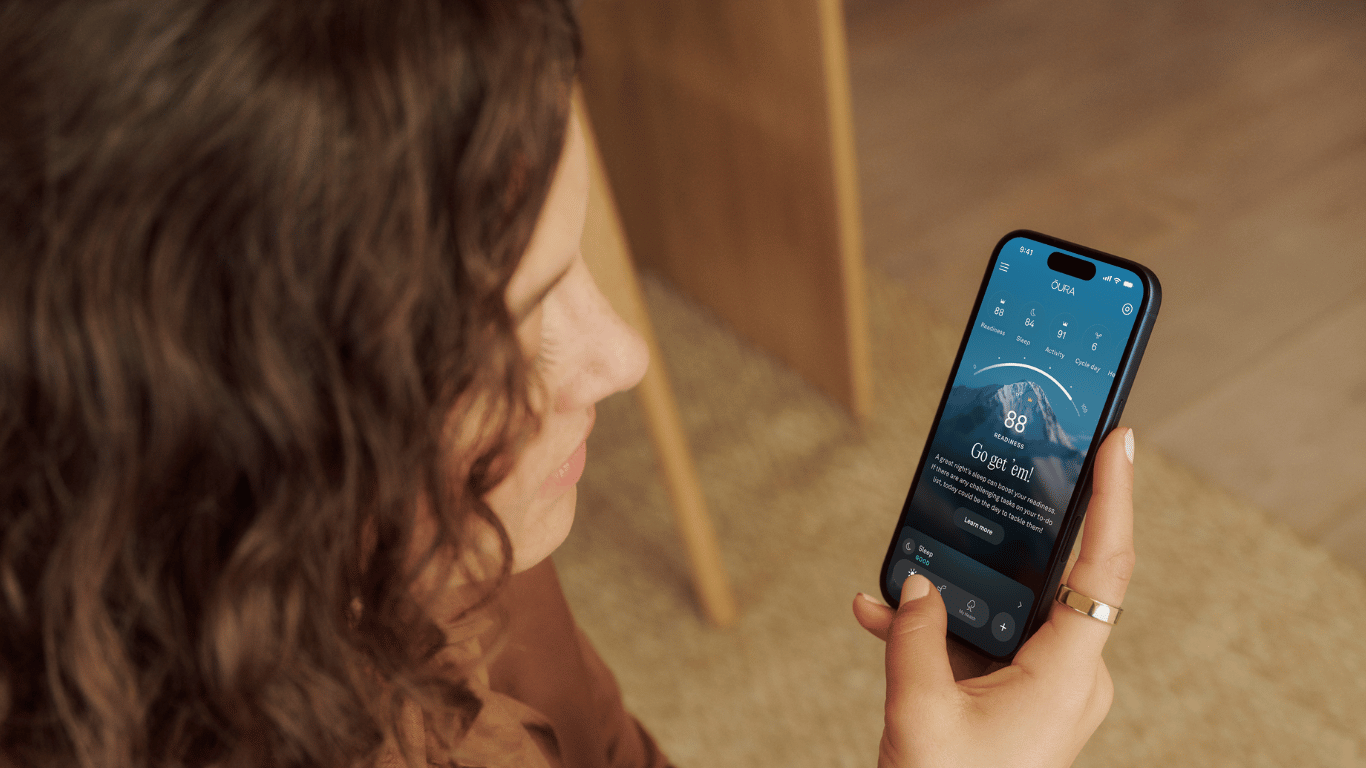
Many women notice lower sleep scores, readiness, and recovery in the days before their period. Learn how hormone fluctuations influence wearable metrics and what your data may actually be telling you.
You slept eight hours. Same bedtime, same routine, nothing obviously different. Yet your Oura Sleep Score dropped, your HRV tanked, and you woke up feeling strangely anxious and exhausted.
This happens to a lot of women in the week before their period. And most of them, when they go looking for an explanation, don't find one that satisfies them.
Your wearable isn't malfunctioning. Your sleep hygiene isn't failing. What changed is your hormones, specifically, the hormonal withdrawal that defines the late luteal phase. And your wearable, whatever brand it is, is sensitive enough to pick that up.
This article explains what it's actually seeing.
What is actually happening to your hormones before your period?
After ovulation, progesterone rises sharply. Estrogen also rises in the early luteal phase before declining. By the late luteal phase, roughly days 22 through 28 in a 28-day cycle, both progesterone and estrogen are falling. By the time your period arrives, both are at their lowest.¹
This hormonal withdrawal is normal. But its effects on the body are not trivial, and wearables are increasingly sensitive enough to capture them.
Progesterone, at its mid-luteal peak, has a sedating effect on the nervous system through the GABA receptor system. As it falls in the late luteal phase, that sedating effect diminishes. The nervous system becomes more reactive. Sleep becomes lighter and more fragmented. The same stress that would have been absorbed earlier in the cycle may now produce a measurable physiological response overnight.²
Estrogen supports serotonin availability, temperature regulation, and REM sleep architecture. As estrogen drops before the period, these systems lose some of their support. Core body temperature rises slightly in the luteal phase, a direct consequence of progesterone, and begins to normalize as the period approaches, but the transition itself can disrupt sleep continuity.³
HRV, heart rate variability, one of the most sensitive markers wearables track, is directly influenced by both the autonomic nervous system and inflammatory signaling. The late luteal phase involves a mild systemic inflammatory response as the uterine lining prepares to shed. This inflammatory shift may lower HRV independently of sleep quality or stress.⁴
The result: your body is doing exactly what it's supposed to do. And your wearable is accurately capturing that it's doing it.
What your wearable can't tell you
Your wearable can tell you your HRV dropped. It can tell you your Readiness Score is lower, your sleep was more fragmented, your resting heart rate edged up.
What it can't tell you is whether progesterone is falling earlier than it should. Whether ovulation was weak this cycle and produced less luteal support. Whether the pattern is worsening month-to-month in a way that's worth paying attention to. Whether what you're seeing is a normal late-luteal wind-down or a hormonal pattern that's changing.
The Readiness Score is the output. The hormone pattern underneath it is the reason. And those are two different datasets, which is why women who track both tend to understand their data in a fundamentally different way than those tracking either one alone.
A woman who knows her progesterone pattern across the cycle can look at a cluster of low Sleep Scores and place them precisely: this was my late luteal phase, this cycle produced a weaker peak, that's why the drop was sharper this time. Without that layer, the scores are accurate but uninterpretable. You know something happened. You don't know what drove it.
Not sure which hormone may be affecting your sleep?
Take our 2-minute Sleep Quiz to learn which hormone patterns may be contributing based on your symptoms and cycle.
→ Take our 2-minute Sleep Quiz.
It's not just Oura
The physiology described in this article isn't specific to Oura. Every wearable that tracks HRV, resting heart rate, skin temperature, or sleep stage distribution is capturing the same hormonal signal, the same progesterone withdrawal, the same inflammatory shift, the same late-luteal changes to autonomic tone.
Whoop users see it in recovery scores and HRV. Whoop's strain-and-recovery model means the late luteal phase can register as systemic load even on days with no training, because it is load, just hormonal rather than physical.
Apple Watch and Apple Health users see it in overnight HRV trends and resting heart rate. The cycle tracking integration in Apple Health can flag this if cycle data is being logged, but it doesn't explain the mechanism.
Garmin users see it in Body Battery and overnight HRV readings, which dip in the late luteal phase for the same reasons.
The question, "why do I feel worse, recover worse, and sleep worse before my period even when nothing changed?", is the same regardless of which device is on your wrist. The wearable is how women discover the pattern. The hormones are what explain it.
Why does HRV drop before my period?
HRV reflects how flexibly your nervous system responds to moment-to-moment demands. Higher HRV generally indicates a system in a more parasympathetic (rest-and-recover) state. Lower HRV suggests more sympathetic activation, a system under load.
Several things converge in the late luteal phase to push HRV lower:
The withdrawal of progesterone removes a key inhibitory signal on the nervous system. Without it, sympathetic tone tends to rise slightly, enough to register in HRV data collected overnight.
The mild prostaglandin-driven inflammatory activity that precedes menstruation creates systemic low-grade stress that the autonomic nervous system responds to, even when you feel subjectively fine during the day.
Core body temperature, already elevated by progesterone through most of the luteal phase, doesn't necessarily drop cleanly. The thermal variability may itself influence overnight HRV measurements.⁵
What's important to understand: a lower HRV in the late luteal phase is not a sign that something is wrong with your recovery or your overall health. It's a sign that your body is in the phase of the cycle where these metrics predictably change. Interpreting a pre-period HRV drop the same way you'd interpret a post-travel HRV drop will lead to the wrong conclusions.
Why is my Readiness Score lower even when I slept enough?
Readiness Scores aggregate multiple signals, HRV, resting heart rate, body temperature, sleep quality, and activity balance. In the late luteal phase, several of these inputs shift simultaneously, even when hours of sleep remain constant.
Resting heart rate tends to be slightly elevated in the luteal phase compared to the follicular phase. Body temperature is higher. HRV is lower. Sleep stages may shift toward lighter sleep even if total duration holds.⁶
Each of these contributes to a lower Readiness Score. Not because you're less recovered, but because your body's baseline in the late luteal phase is genuinely different than it is in the follicular phase. The wearable algorithm wasn't built to account for cycle phase, it's comparing your late-luteal physiology to your mid-cycle physiology and flagging the difference as reduced readiness.
This is the key interpretive point: your score is accurate relative to your own recent baseline. But that baseline is itself cycling. The Readiness Score is telling you something real, it's just not telling you whether that something is cause for concern or simply where you are in your cycle.
Why does my Sleep Score drop even though I'm not doing anything differently?
This is the most common and most frustrating pattern women describe. Sleep hygiene unchanged. Alcohol unchanged. Bedtime unchanged. Score lower.
The explanation lies in what the Sleep Score is measuring: not just duration, but sleep stage distribution, fragmentation, and overnight physiology.
In the late luteal phase, progesterone withdrawal reduces the GABAergic calming of the nervous system that supports deep sleep and sleep continuity. REM sleep may be affected by the decline in estrogen. Overnight cortisol, which follows a natural rhythm, rising in the early morning, may be slightly more pronounced in the late luteal phase as the inhibitory effect of progesterone diminishes.⁷
The result is a night that looks the same from the outside, same duration, same apparent sleep, but reads differently on a wearable because the underlying physiology is different. More fragmentation. Less deep sleep. Slightly elevated resting heart rate. These are real changes, and Oura is picking them up correctly. What it can't tell you is that they're cycle-driven rather than lifestyle-driven.
This is where hormone data changes the interpretation entirely. A woman who knows her progesterone pattern across her cycle can look at a cluster of low Sleep Scores and place them precisely in her luteal phase, and understand them as predictable and cycle-driven rather than unexplained and concerning.
Read More: How Hormones Affect Your Sleep (And What to Do About It)
Is the drop the same every cycle?
Not necessarily, and the variability is often informative.
Some cycles produce a sharper late-luteal drop in scores than others. This variability typically reflects differences in the hormonal quality of that cycle: how robust ovulation was, how much progesterone was produced at peak, and how abruptly it falls before the period.
A cycle with a strong ovulation and a healthy mid-luteal progesterone peak may still produce a late-luteal score drop, but the drop may be smaller and the transition smoother. A cycle with a weaker ovulation, less progesterone produced, shorter luteal phase, may produce a more pronounced score decline, because there's less progesterone to lose and the withdrawal is more abrupt relative to what was there.⁸
Women who use longitudinal hormone monitoring alongside wearable data often notice this correlation directly: the cycles with the lowest late-luteal Sleep Scores are the same cycles that show lower or shorter progesterone peaks. The wearable is capturing the hormonal quality of the cycle, one level removed.
This is also why anovulatory cycles, cycles where ovulation doesn't occur and progesterone remains minimal throughout, may paradoxically show less of a late-luteal score drop, but worse overall sleep quality throughout the cycle. There's no progesterone peak to fall from, so no sharp late-luteal withdrawal, but the sustained absence of progesterone's GABAergic support affects sleep throughout.
For more on how cycle phase affects recovery metrics specifically, see Can Hormones Affect Recovery?, and for the broader question of why symptoms often appear before labs change, Why Your Hormones Look Normal But You Still Feel Terrible covers that gap directly.
What does this look like across the full cycle?
Understanding the full cycle pattern helps contextualize the late-luteal drop.
Follicular phase (days 1–13 approximately): After the period ends and estrogen begins rising, most women notice a gradual improvement in Sleep Scores, HRV, and readiness. Estrogen supports serotonin and promotes deeper sleep. The nervous system has less inflammatory load. This tends to be the phase of highest scores and fastest recovery.
Ovulation (day 14 approximately): The LH surge and ovulation itself may briefly disrupt sleep in some women, a mild stress response associated with the hormonal peak. Most women don't notice this, but some Oura users have flagged a single-night dip around ovulation.
Early luteal phase (days 15–21 approximately): Progesterone rises, providing its sedating effect. Body temperature rises, which shows up in Oura's temperature trend data. HRV may dip slightly from the estrogen-peak high, but sleep quality often remains good because of progesterone's GABAergic support. This is a phase of productive, if slightly warmer, sleep.
Late luteal phase (days 22–28 approximately): As both progesterone and estrogen fall, scores tend to decline. HRV drops. Resting heart rate may edge up. Sleep fragmentation may increase. Readiness falls. This is the window that generates the most questions.
Menstruation (days 1–5): The period arrives, progesterone and estrogen are at their lowest, but the inflammatory prostaglandin activity that preceded the period begins to resolve. Many women notice scores begin to recover mid-period even before hormones have meaningfully risen, as the inflammatory signal diminishes.⁹
The cycle pattern in your wearable data, tracked over three or more cycles, is often more informative than any individual score. The question worth asking isn't "why was my Sleep Score low on Tuesday?" It's "does my score predictably cycle with my hormones?"
What should I actually do with this information?
Knowing that late-luteal score drops are hormonal and predictable changes what you do, and what you don't do, with the data.
Don't aggressively modify behavior based on a pre-period Readiness Score. If your score drops to 65 in the late luteal phase every cycle, that's not a recovery deficit requiring intervention. It's your baseline for that phase. Treating it as a crisis and dramatically reducing training load or adding recovery protocols every pre-period week is responding to cycle physiology as if it were a training error.
Do pay attention to whether the drop is worsening over time. A stable, predictable late-luteal drop that stays within a consistent range is a cycle signature. A drop that is progressively deepening over months, lower floor, longer duration, harder recovery, may signal a change in hormonal quality worth investigating.
Do look for outliers. If a particular cycle's late-luteal drop is dramatically worse than your usual pattern, that's informative. It may reflect a cycle with suboptimal progesterone production, higher inflammatory load, a particularly stressful period, or early perimenopause changes in cycle quality.
Do correlate with symptoms. If the cycles with the worst Oura Sleep Scores also involve the worst PMS, the most disruptive sleep, the highest anxiety, and the lowest energy, that correlation is data. It suggests the hormonal quality of those cycles matters not just for your scores but for your daily experience.
For women in perimenopause, this pattern often amplifies. As cycles become more variable and progesterone production less consistent, the late-luteal score drop may become less predictable and more severe. Waking at 3am in particular may become more frequent in the pre-period window, as declining progesterone removes the GABAergic buffer that previously kept the overnight transition smooth. Understanding where you are in the perimenopause transition can help contextualize whether a worsening pattern reflects normal cycle variation or something worth investigating further.
Why a single hormone test doesn't explain this either
Many women, frustrated by consistently lower pre-period scores, ask their doctor to check their hormones. The results often come back normal.
The challenge is familiar: a single progesterone draw on day 21 confirms that ovulation occurred. It doesn't tell you whether progesterone was adequate across the full luteal phase, whether it rose quickly enough after ovulation, or whether it declined too abruptly before the period. It doesn't capture whether the pattern is consistent or whether some cycles are producing stronger luteal support than others.
The Oura Sleep Score drop is capturing something real. But interpreting what it means requires knowing what the hormonal pattern underneath it looked like, not on one day, but across the entire luteal phase.
A woman who tracks both her hormone patterns and her wearable data has two layers of the same story. The wearable shows the physiological output. The hormone data shows what's driving it. Together, they explain what neither can explain alone.
Related Reading
Perimenopause Insomnia: Why You Can't Sleep (And How to Fix It), Why progesterone, estrogen, and cortisol often disrupt sleep before periods become irregular.
Can Hormones Affect Recovery? Why HRV, Readiness, and Recovery Scores change across your cycle.
How Hormones Affect Your Sleep (And What To Do About It), A complete guide to hormones, sleep quality, and wearable data.
Why Anxiety, Insomnia, and Heart Palpitations Often Show Up Together, The hormonal connection between three symptoms many women think are unrelated.
Frequently Asked Questions
Why does my Oura Sleep Score drop before my period?
In the late luteal phase, progesterone and estrogen both decline before menstruation begins. Progesterone's withdrawal reduces the brain's GABAergic sleep-stabilizing support, HRV falls, resting heart rate rises slightly, and the mild inflammatory activity that precedes the period creates additional physiological load. Oura captures all of these changes, which is why scores often drop in this phase even when sleep habits haven't changed.
Is a lower HRV before my period normal?
Yes. HRV naturally fluctuates across the menstrual cycle, typically peaking in the follicular phase and declining in the late luteal phase. This is driven by the withdrawal of progesterone, rising sympathetic tone, and mild prostaglandin-mediated inflammatory activity before menstruation. A consistent pre-period HRV dip is a cycle signature, not a health concern.
Why is my Readiness Score low even though I slept 8 hours?
Readiness aggregates multiple signals beyond sleep duration, including HRV, resting heart rate, and body temperature trend data, all of which shift in the late luteal phase. Your total sleep time may be unchanged, but the underlying physiology Oura is measuring is genuinely different in this phase of your cycle. The algorithm compares your current data to your recent baseline without accounting for cycle phase.
Does the score drop happen the same way every cycle?
Not necessarily. Cycles with stronger ovulation and higher progesterone peaks tend to show smaller, smoother late-luteal score drops. Cycles with weaker ovulation and lower progesterone may show sharper, more prolonged drops. Tracking the pattern across multiple cycles can reveal whether your late-luteal drop is stable or worsening, which is itself informative about hormonal quality.
What does this mean for perimenopause?
As perimenopause progresses, ovulation becomes less consistent and progesterone production more variable. Late-luteal score drops may become deeper, more prolonged, or less predictable. This is one of the ways wearable data can signal early hormonal changes before cycles become visibly irregular.
Can I use my Oura data to understand my hormone health?
Wearable data reflects physiological output, it shows the body's response to hormonal shifts but doesn't measure hormones directly. Combining wearable data with daily hormone tracking provides a more complete picture: the wearable shows what's happening to your body, and hormone data shows what's driving it.
About the author
Sources
- Prior JC. "Progesterone for symptomatic perimenopause treatment." Facts, Views and Vision in ObGyn. 2011;3(2):109–120.
- Majewska MD, et al. "Steroid hormone metabolites are barbiturate-like modulators of the GABA receptor." Science. 1986;232(4753):1004–1007.
- Shechter A, Boivin DB. "Sleep, hormones, and circadian rhythms throughout the menstrual cycle in healthy women." International Journal of Endocrinology. 2010.
- Gudmundsdottir SL, et al. "Heart rate variability in healthy menstruating women." American Journal of Human Biology. 2009.
- Sato N, et al. "Heart rate variability and basal body temperature during the menstrual cycle." Journal of Physiological Anthropology. 2020;39(1):36.
- Bruinvels G, et al. "The prevalence and impact of heavy menstrual bleeding (menorrhagia) in elite and non-elite athletes." PLoS One. 2016;11(2).
- Backstrom T, et al. "Allopregnanolone and mood disorders." Progress in Neurobiology. 2014;113:88–94.
- Wehrens SM, et al. "Meal timing regulates the human circadian system." Current Biology. 2017;27(12):1768–1775.
- Bäckström T, et al. "The role of hormones and hormonal treatments in premenstrual syndrome." CNS Drugs. 2003;17(5):325–342.
About the Oova Blog:
Our content is developed with a commitment to high editorial standards and reliability. We prioritize referencing reputable sources and sharing where our insights come from. The Oova Blog is intended for informational purposes only and is never a substitute for professional medical advice. Always consult a healthcare provider before making any health decisions.